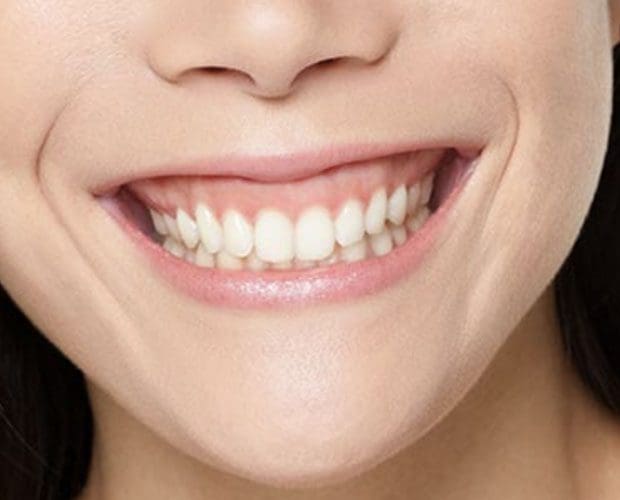
Welcome to Doncaster Dental, where your smile is our passion. Transform your smile with our gummy smile treatment. Our dedicated team is committed to providing personalised care that meets each patient’s unique needs.
A gummy smile occurs when an excessive amount of gum tissue is visible above the top teeth when smiling. This can make the teeth appear shorter and affect the overall aesthetics of your smile. At Doncaster Dental, we understand that your smile is an important part of your identity and confidence.
Our gummy smile correction service is designed to bring harmony and balance to your smile. We gently reshape the gum line to expose more of your natural tooth structure, creating a more proportionate and visually appealing smile.
If you’re ready to say goodbye to a gummy smile and hello to a radiant, confident new you, contact Doncaster Dental today. Schedule your consultation and take the first step towards the smile you’ve always dreamed of.
A gummy smile is a cosmetic concern in which an excessive amount of gum tissue is visible above the upper teeth when smiling. While there is no single clinical definition, a gummy smile is generally considered present when more than three to four millimetres of gum is exposed on smiling. This can make the teeth appear shorter or smaller than they are and affect the overall proportions and aesthetics of the smile. A gummy smile is not a medical problem — it does not affect oral health — but it is a common source of self-consciousness that can be effectively addressed with treatment at Doncaster Dental.
A gummy smile can result from several different underlying causes, which is why identifying the specific cause is an important first step before treatment. The most common cause is excess gum tissue that covers more of the tooth crown than normal — often due to the way the teeth erupted during development, leaving the gums sitting higher on the tooth surface than ideal. Other causes include a short upper lip that rises high when smiling and exposes more gum, an overactive upper lip muscle that causes the lip to lift excessively, teeth that are naturally short or worn down, a jawbone that has developed with excess vertical height, and certain medications such as calcium channel blockers, cyclosporine, and some anticonvulsants that cause gingival overgrowth as a side effect. The cause determines the appropriate treatment approach, which is why a thorough assessment at Doncaster Dental is the important first step.
In an ideally proportioned smile, the upper teeth fill the smile frame with one to two millimetres of gum visible or less. A small amount of gum exposure is completely normal and generally considered aesthetically pleasing — it gives the smile a natural, healthy appearance. Exposure of three to four millimetres or more is where most people begin to feel self-conscious, and above four millimetres is where a gummy smile is more clearly defined clinically. However, what matters most is how the patient feels about their smile — there is no absolute threshold at which treatment is required, and the decision to address a gummy smile is entirely personal. A consultation at Doncaster Dental can help you understand your options and what outcome is achievable.
Yes, in many cases. The underlying factors that contribute to a gummy smile — including gum tissue thickness and coverage, tooth eruption patterns, jaw development, and lip length — have a significant genetic component. If your parents have a gummy smile, you are more likely to as well. However, a gummy smile can also develop as a result of non-genetic factors such as medication side effects or developmental changes, so a genetic predisposition is not universal. Regardless of cause, the condition is treatable — a consultation at Doncaster Dental will establish what is driving the excess gum display and recommend the most appropriate approach.
It depends on the underlying cause. For gummy smiles caused by excessive gum tissue covering the tooth crowns, gum contouring — which can be performed with a laser or traditional instruments — removes the excess tissue and is a minimally invasive procedure rather than extensive surgery. In cases where the gummy smile is caused by an overactive or short upper lip, anti-wrinkle injections (muscle relaxants) can be used to limit how far the lip rises when smiling, providing a non-surgical option. More significant cases involving jaw bone excess may require orthognathic surgery for a permanent result. Your dentist at Doncaster Dental will assess the specific cause and recommend the least invasive treatment that achieves the outcome you are looking for.
Gummy smile treatment is generally recommended once dental and facial development is complete — typically from the late teens onwards — to ensure the gumline has stabilised and treatment results will be long-lasting. Treating a gummy smile while the jaw and teeth are still developing risks the gum tissue growing back or the treatment outcome changing as development continues. For younger patients, a watch-and-monitor approach is typically recommended until development is complete. Adults of any age can be assessed and treated, and there is no upper age limit. A consultation at Doncaster Dental will determine whether the timing is right for treatment based on your stage of development and individual situation.
For gummy smiles caused by excess gum tissue, gum contouring produces long-lasting results in most patients — the removed gum tissue does not grow back under normal circumstances. However, if the gummy smile is caused by medications that stimulate gingival overgrowth, the gum tissue may regrow if the medication is continued. In cases where the upper lip is the cause and anti-wrinkle injections are used, the effect is temporary and repeat treatment every four to six months is needed to maintain the result. Gum lifting combined with veneers to optimise tooth length and proportions can produce highly durable cosmetic outcomes. Your dentist will advise on the expected longevity of results based on the cause and treatment used.
Gummy smile treatment is primarily a cosmetic procedure and is generally not covered by private health insurance in Australia. However, if gum contouring is performed for a clinical reason — such as correcting uneven gum levels around a tooth being restored with a crown, or treating gum overgrowth caused by medication — a partial health fund benefit may apply under major dental. It is worth checking with your insurer, particularly if there is a clinical component to the treatment. For purely cosmetic gummy smile correction, out-of-pocket costs apply. Doncaster Dental can provide an itemised quote during your consultation so you have a clear understanding of costs before proceeding.
Take advantage of our new patient special today. Call us on (03) 9848 1322 or book online!