Call nowBook Online

Impacted Wisdom Teeth Treatment and Expert Care

Impacted wisdom tooth treatment

Impacted Wisdom Teeth Treatment

We understand that wisdom teeth can be a real pain—literally. Doncaster Dental is equipped to handle even the most stubborn cases of impacted wisdom teeth with precision and care.

Understanding Impacted Wisdom Teeth

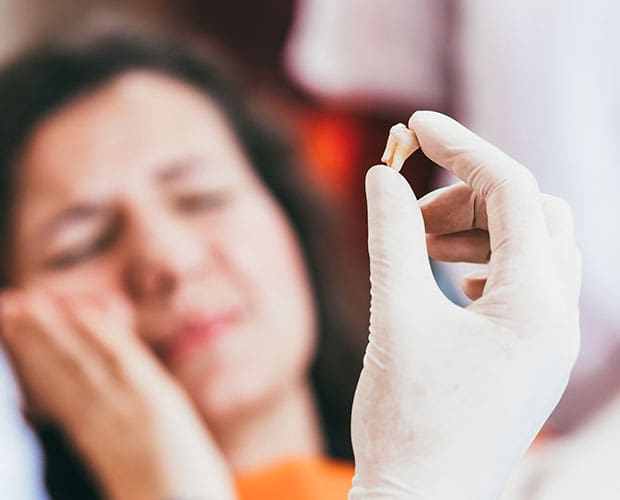
Wisdom teeth, or third molars, are the last to emerge in your mouth, usually during your late teens or early twenties. Sometimes, there isn’t enough room for them to grow properly, leading to impacted wisdom teeth. This can cause pain, swelling, and even infection. But don’t worry, our team is here to help.

Our Approach to Treatment

Our impacted wisdom teeth treatment is not just about relieving pain—it’s about ensuring your long-term oral health.

The Steps:

  1. Assessment: We start with a detailed examination, including X-rays, to understand the position and condition of your wisdom teeth.
  2. Personalised Plan: Each patient is unique, so we tailor a treatment plan that suits your specific needs.
  3. Surgical Procedure: Our experienced dentists perform tooth extractions with care, using sedation to help ensure your comfort.
  4. Aftercare: We provide thorough aftercare instructions and follow-up appointments to monitor your healing process.

Why Trust Doncaster Dental?

  • Experienced Dentists: Our experienced dentists perform wisdom teeth extractions with a focus on your comfort and care.
  • Advanced Technology: We use the latest dental technology for accurate diagnosis and effective treatment.
  • Patient Comfort: We prioritise your comfort and offer various sedation options to make your experience as stress-free as possible.
  • Comprehensive Care: From initial consultation to post-operative care, we’re with you every step of the way.

Say Goodbye to Wisdom Tooth Woes

Impacted wisdom teeth can be a source of discomfort and health issues, but at Doncaster Dental, we’re committed to providing relief and peace of mind. Book your appointment today and take the first step towards a healthier, happier mouth.

Frequently Asked Questions

Impacted wisdom teeth are third molars that are unable to fully emerge through the gum because there is insufficient space in the jaw, or because they are growing at an angle that prevents normal eruption. Wisdom teeth typically develop between the ages of 17 and 25, and most people do not have enough room in their jaw to accommodate them properly. An impacted wisdom tooth may be partially impacted — breaking through the gum only partially — or fully impacted, meaning it remains entirely below the gumline and within the jawbone. Both types can cause significant problems if left untreated.

Impacted wisdom teeth do not always cause immediate symptoms, particularly in fully impacted cases where the tooth has not broken through the gum. When symptoms do occur, they commonly include persistent pain or aching at the back of the jaw, swollen, red, or bleeding gums around the back teeth, difficulty or discomfort when opening the mouth, bad breath or an unpleasant taste near the back of the mouth, jaw stiffness, and pain radiating to the ear or side of the face. Partially impacted wisdom teeth — where the tooth has broken through the gum only partially — are particularly prone to causing symptoms due to the risk of infection in the surrounding gum tissue.

Wisdom teeth become impacted primarily because the human jaw has evolved to be smaller over time, leaving insufficient space for third molars to erupt in the correct position. When a wisdom tooth attempts to emerge into a crowded jaw, it may grow at an angle — pointing forward into the adjacent molar, sideways, or even backwards — or it may be blocked by bone and unable to erupt at all. Genetics play a significant role, meaning that if your parents had impacted wisdom teeth, you are more likely to as well. Regular dental X-rays at Doncaster Dental allow the dentist to monitor the development of wisdom teeth before they cause problems.

Leaving impacted wisdom teeth untreated can lead to a range of serious complications over time. Partially impacted wisdom teeth create a pocket of gum tissue that traps food and bacteria, making them susceptible to infection — a condition known as pericoronitis, which causes pain, swelling, and can spread to the jaw, neck, and throat if untreated. Fully impacted teeth can damage the roots of the adjacent molar, increase the risk of cyst formation around the follicle of the tooth, and contribute to crowding or shifting of surrounding teeth. Decay in partially erupted wisdom teeth is also common because they are difficult to clean effectively.

Pericoronitis is an infection of the gum tissue surrounding a partially erupted wisdom tooth. When a wisdom tooth only partially breaks through the gum, the flap of gum tissue covering it — known as an operculum — creates a pocket that is extremely difficult to clean, trapping food debris and bacteria underneath. This leads to inflammation and infection that can cause intense localised pain, swelling of the gum and jaw, difficulty opening the mouth, and occasionally fever and swollen lymph nodes. Pericoronitis is a common cause of urgent wisdom tooth pain. Contact Doncaster Dental on (03) 9848 1322 promptly if you suspect an infection — if swelling is affecting your breathing or swallowing, go to your nearest emergency department immediately.

Assessment begins with a detailed clinical examination of your mouth, jaw, and gum tissue. Advanced dental X-rays — including OPG (orthopantomogram) X-rays that capture a panoramic view of the entire jaw — are used to assess the position, angle, depth, and proximity of the wisdom teeth to surrounding nerves and structures. This information allows the dentist to determine whether extraction is recommended, and whether it can be performed chairside at Doncaster Dental under local anaesthetic or whether referral to a hospital setting under general anaesthetic is more appropriate for complex cases.

Not necessarily. Fully impacted wisdom teeth that are causing no symptoms, have no associated pathology such as cysts or decay, and are not damaging adjacent teeth may be monitored rather than immediately removed. However, because impacted wisdom teeth are prone to developing problems over time — particularly pericoronitis, cysts, and damage to adjacent molars — many dentists recommend removal as a preventive measure, particularly in younger patients where the roots are less developed and recovery is typically faster and easier. Your dentist at Doncaster Dental will assess each tooth individually and recommend the most appropriate course of action based on its position, your symptoms, and your age.

Yes. Impacted wisdom teeth can cause referred pain that is felt in areas beyond the immediate site of the tooth. An impacted lower wisdom tooth growing at an angle toward the adjacent molar can place pressure on its roots, causing pain in that tooth that may be mistaken for a problem with the molar itself. Muscle tension and inflammation in the jaw caused by the eruption attempt can cause jaw pain, earache, and headaches. In some cases, patients are surprised to learn that pain they attributed to a different tooth or to the jaw joint is actually originating from an impacted wisdom tooth identified on X-ray at Doncaster Dental.

The approach depends on the position and depth of the impacted tooth. Straightforward cases involving partially impacted or superficially impacted teeth are performed chairside at Doncaster Dental under local anaesthetic. More complex cases — particularly deeply impacted teeth, those close to the inferior alveolar nerve, or cases where a patient prefers to be fully asleep — are referred to a hospital setting where the procedure is performed under general anaesthetic. In all cases, the process begins with a thorough assessment and X-rays, followed by a personalised treatment plan and detailed aftercare instructions to support recovery. For more detail on the extraction process, recovery time, and what to expect, visit the Wisdom Teeth Extraction page.

We treat everyone as our family, with caring dentistry

Take advantage of our new patient special today. Call us on (03) 9848 1322 or book online!

X