Root canal treatment is often misunderstood and has developed an unfair reputation in dentistry. The reality is that with modern anaesthesia and techniques, the procedure itself causes no more discomfort than having a standard filling, and in most cases, it provides immediate relief from the severe pain caused by a tooth infection.
At Doncaster Dental, our experienced dental team performs root canal treatment with a gentle, comfort-focused approach. Our priority is to relieve your pain, save your natural tooth, and restore it so it functions normally for years to come.
If you’re experiencing severe toothache, persistent sensitivity, or swelling around a tooth, don’t wait, call us on (03) 9848 1322. We offer same-day emergency appointments for patients who call before 12pm.
We serve patients from Doncaster, Templestowe, Doncaster East, Balwyn North, Bulleen, Box Hill North, Blackburn North, and surrounding suburbs.
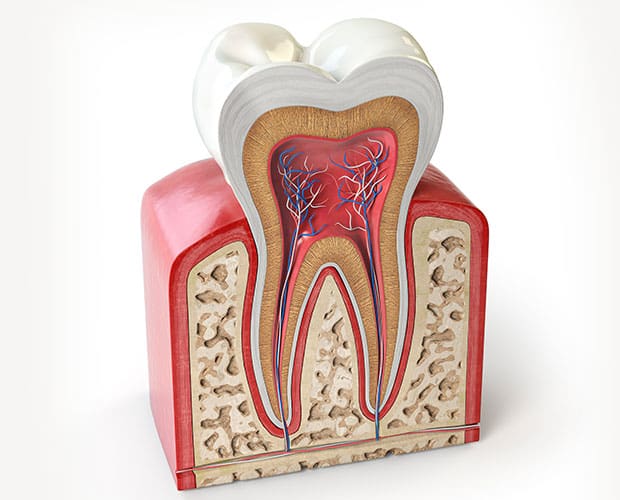
Inside every tooth, beneath the hard enamel and dentine, is a soft tissue space called the root canal. This space contains the dental pulp, a collection of nerves, blood vessels, and connective tissue that kept the tooth alive during its development.
Once a tooth is fully formed, the pulp is no longer essential to its function. However, if bacteria reach the pulp, through deep tooth decay, a crack or fracture, or trauma, the pulp becomes infected and inflamed. This infection causes the severe, throbbing pain associated with a tooth abscess, and can spread to surrounding bone and tissue if left untreated.
Root canal treatment (also known as endodontic treatment) removes the infected pulp, thoroughly cleans and disinfects the root canals, seals them to prevent reinfection, and restores the tooth so it can continue to function normally. The tooth remains in place, and in most cases, the only lasting difference is that it no longer has a nerve.
Root canal treatment is typically needed when the pulp inside a tooth has become infected or is dying. Common signs include:
If you’re experiencing any of these symptoms, call Doncaster Dental on (03) 9848 1322) as soon as possible. A tooth infection will not resolve on its own and will worsen without treatment, and in some cases, a spreading dental abscess can become a serious medical emergency.
1. Assessment & Diagnosis
Your dentist will examine the affected tooth and take digital X-rays to assess the extent of the infection, the shape and number of root canals, and whether the tooth is suitable for root canal treatment. This gives us a clear picture of what’s involved before treatment begins.
2. Local Anaesthetic
The tooth and surrounding area are completely numbed with local anaesthetic before any treatment begins. You should feel no pain during the procedure, only occasional pressure sensations. If at any point you feel discomfort, let your dentist know immediately and additional anaesthetic can be administered.
3. Accessing the Pulp
A small opening is made in the top (crown) of the tooth to access the root canal system beneath.
4. Removing the Infected Pulp
Using fine dental instruments, the infected or damaged pulp tissue is carefully removed from the root canals. The canals are then shaped and enlarged to allow thorough cleaning.
5. Cleaning & Disinfecting
The root canals are irrigated with an antimicrobial solution to eliminate any remaining bacteria and debris. This is a critical step in preventing reinfection.
6. Sealing the Canals
The cleaned canals are filled and sealed with a biocompatible material called gutta-percha, which fills the space left by the removed pulp and prevents bacteria from re-entering.
7. Restoring the Tooth
In most cases, a root canal-treated tooth requires a dental crown to protect it from fracture and restore full chewing function. The crown is typically placed at a separate appointment following the root canal procedure. Where CEREC technology allows, same-day crowns may be available, ask our team for details.
When a tooth is severely infected, the two main options are root canal treatment or extraction. Wherever possible, saving the natural tooth is the preferred approach, and for good reason.
Keeping your natural tooth:
If extraction is unavoidable, we will discuss tooth replacement options with you, including dental implants, dental bridges, and dentures, to ensure the gap is addressed and your long-term oral health is protected. See our full range of restorative dentistry options →
Gentle, experienced dentists. Our team, Dr Jamie Do, Dr Brendan Moore, and Kate Jolly, perform root canal treatment with precision and care, minimising discomfort throughout.
Advanced diagnostic technology. We use digital X-rays and OPG imaging for accurate assessment of the root canal system before and during treatment. Learn more about our technology →
CEREC same-day crowns. In many cases, our CEREC technology allows us to design, mill, and fit a permanent crown in a single visit following root canal treatment, meaning fewer appointments and faster restoration of the tooth.
Same-day emergency appointments. Tooth infections are urgent. If you call before 12pm, we will do our best to see you the same day. Call (03) 9848 1322) immediately if you are in pain.
Complete care under one roof. From diagnosis through to restoration with a crown, your entire treatment is managed by our team at 838 Doncaster Road, no referrals to external specialists in most cases.
Established since 1962. One of Doncaster’s longest-serving and trusted dental practices, providing high-quality general and restorative dentistry to the local community for over 60 years.
Root canal treatment (RCT) is a dental procedure designed to save a tooth that has become severely infected or damaged. Inside every tooth is a space called the root canal, which houses the dental pulp — a soft tissue containing nerves, blood vessels, and fibres that keep the tooth alive. When this pulp becomes infected due to deep decay, trauma, or a crack, root canal treatment removes the infected tissue, cleans and seals the canal, and restores the tooth with a filling or crown so it can continue to function normally.
Root canal treatment has a strong reputation for being painful, but modern techniques mean the procedure itself is no more uncomfortable than having a standard filling. At Doncaster Dental, local anaesthetic is used to numb the tooth and surrounding area completely before treatment begins. Many patients find the procedure more comfortable than they expected. Some tenderness in the days following treatment is normal and can usually be managed with over-the-counter pain relief.
Common signs that root canal treatment may be needed include severe or persistent toothache, prolonged sensitivity to hot or cold that lingers after the source is removed, swollen or tender gums around a tooth, a darkening or discolouration of a tooth, and a pimple-like bump on the gum near the affected tooth. These symptoms indicate the pulp inside the tooth may be infected or dying. If you are experiencing any of these, call Doncaster Dental on (03) 9848 1322 promptly — delaying treatment can allow the infection to spread.
The procedure begins with local anaesthetic to ensure you are completely comfortable. The dentist then makes a small opening in the top of the tooth to access the root canal. The infected or damaged pulp tissue is carefully removed, and the canals are cleaned and shaped to eliminate all bacteria and debris. The cleaned canals are filled and sealed with a biocompatible material to prevent reinfection. In most cases, the tooth is then restored with a filling or dental crown to protect it and restore full function.
Root canal treatment at Doncaster Dental is typically completed over one to two appointments, depending on the complexity of the infection and the number of root canals in the tooth. Straightforward cases with single-rooted teeth may be completed in a single visit, while more complex cases involving multi-rooted teeth or persistent infection may require a second appointment to ensure the canals are fully clear before sealing. Your dentist will give you a clear treatment timeline during your consultation.
Wherever possible, saving your natural tooth is the preferred approach. Root canal treatment allows you to keep the tooth, maintain the natural bite and alignment of surrounding teeth, and avoid the cost and complexity of tooth replacement options such as dental implants or bridges. Extracting a tooth without replacing it can lead to neighbouring teeth shifting, bone loss in the jaw, and long-term bite problems. Your dentist at Doncaster Dental will recommend the most appropriate option based on the condition of the tooth.
A tooth that has been treated with root canal therapy and properly restored with a crown can last many years — in many cases, a lifetime — with good oral hygiene and regular dental check-ups. The longevity of the tooth depends on the quality of the restoration, your home care routine, and attending regular check-ups at Doncaster Dental to monitor the tooth over time.
It is normal to experience some tenderness or mild discomfort in the treated area for a few days following root canal treatment, particularly when biting or applying pressure. This is a natural part of the healing process and can usually be managed with over-the-counter pain relief such as ibuprofen. Swelling or severe pain that worsens after the first day or two should be reported to Doncaster Dental promptly. You should avoid chewing hard foods on the treated side until the tooth has been permanently restored with a filling or crown.
Root canal treatment is generally covered under major dental with private health insurance extras policies in Australia, though the level of cover varies between funds and plans. Many policies have annual limits and waiting periods that apply, so it is worth checking your entitlements with your insurer before your appointment. Doncaster Dental can provide an itemised treatment plan to help you understand the costs involved and submit a health fund claim.
Take advantage of our new patient special today. Call us on (03) 9848 1322 or book online!